Walkway Driveway Design and Construction
Walkway driveway design is crucial for both aesthetics and functionality. This guide explores the key aspects of creating safe, attractive, and durable walkways and driveways, covering design principles, construction methods, and essential maintenance strategies. From selecting the right materials to preparing the land, we’ll delve into practical steps to ensure your outdoor spaces are both beautiful and long-lasting.
This comprehensive overview will cover everything from choosing the ideal materials for your climate to understanding various construction techniques. We’ll also explore the crucial maintenance steps to keep your walkway and driveway in excellent condition for years to come. By considering both design and practical application, you can achieve a space that enhances your property while offering a smooth and safe transition.
Design Considerations
Source: nugentsealcoatingandpaving.com
Walkways and driveways are essential elements of any property, contributing significantly to its aesthetic appeal and functionality. Proper design, considering accessibility, safety, and the surrounding environment, is crucial for creating a welcoming and long-lasting space. Careful planning ensures these areas meet the needs of residents and visitors while harmonizing with the overall property design.
A well-designed walkway and driveway should seamlessly integrate into the landscaping, offering a clear and safe path for pedestrians and vehicles. Careful consideration of materials, textures, and lighting is key to achieving this balance. These elements should not only enhance the aesthetic but also ensure accessibility and safety, especially for individuals with mobility limitations.
Design Principles for Accessibility and Safety
Walkways and driveways should be designed with accessibility in mind. This involves considering the needs of individuals with mobility limitations, including proper slope gradients, handrails where necessary, and sufficient width for wheelchair accessibility. Safety features, such as non-slip surfaces and adequate lighting, are equally important for all users. Clear sightlines and well-defined edges help prevent accidents.
Materials and Textures for Different Climates
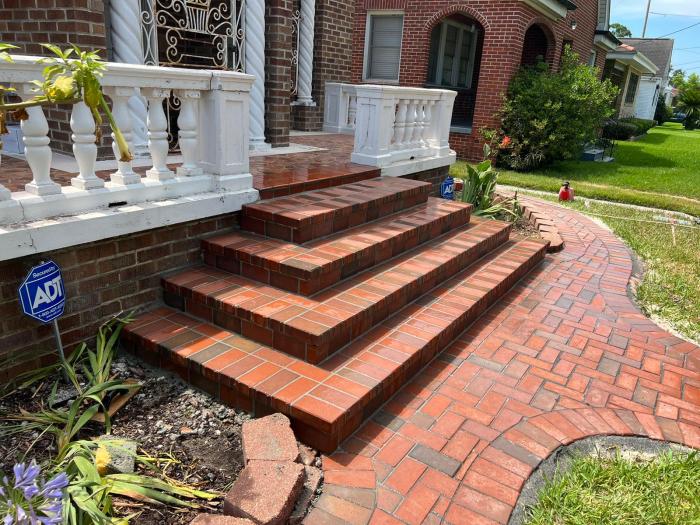
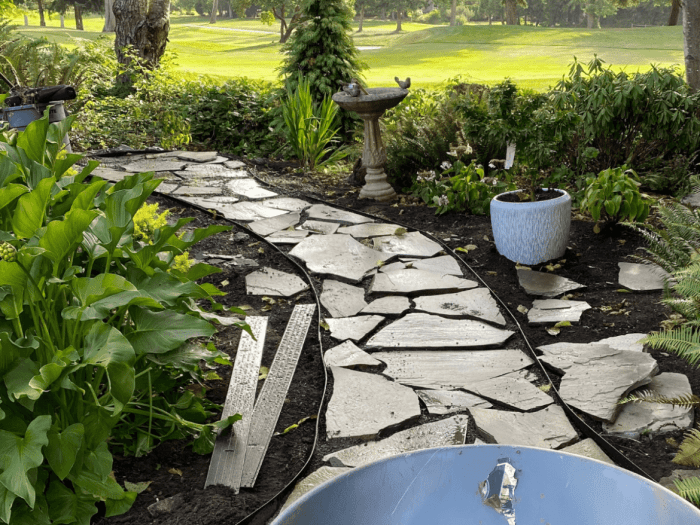
A wide range of materials and textures are suitable for walkway and driveway construction. The best choice depends on factors like budget, climate, and desired aesthetic. Concrete, a durable and versatile option, is readily available and suitable for various climates. Pavers, in different shapes and sizes, offer a more visually appealing alternative but require more specialized installation. Natural stone, such as flagstone or brick, provides a classic, elegant look, but its cost and maintenance requirements can be higher.
For climates with significant freezing and thawing cycles, frost-resistant materials are essential to prevent damage and cracking. In warmer climates, porous materials like pavers might be better suited to absorb and dissipate heat, reducing the risk of scorching. Wood, while beautiful, requires more maintenance in areas with high humidity or moisture.
Landscaping Options to Enhance Walkways and Driveways
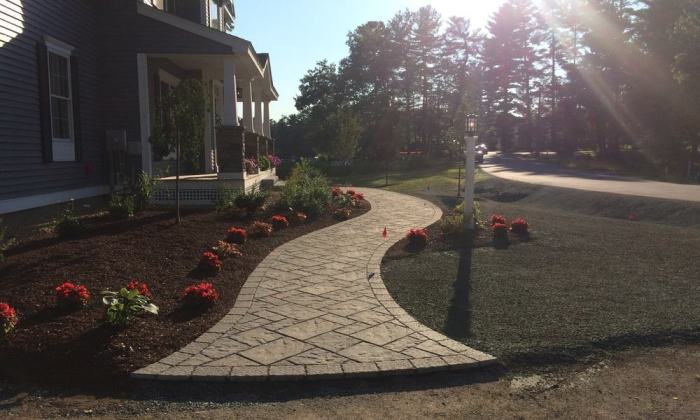
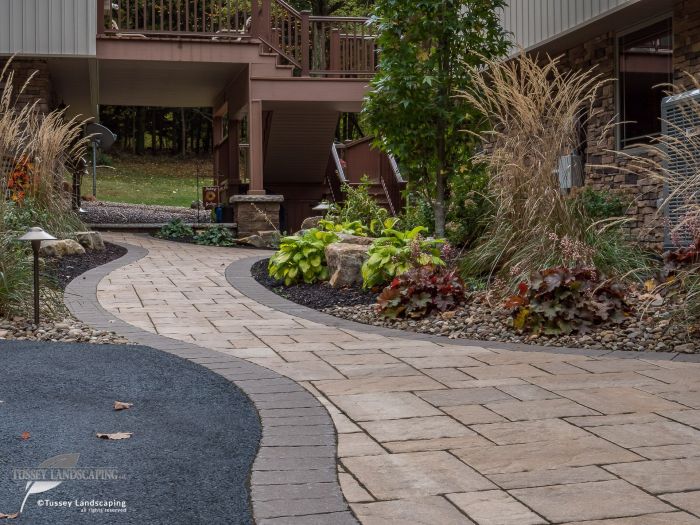
Landscaping plays a vital role in enhancing the aesthetic appeal and functionality of walkways and driveways. Strategic planting of shrubs, flowers, and trees can create visually appealing borders and soften the transition between hardscape and landscape. Careful selection of plants that thrive in the local climate is important. Adding decorative gravel or mulch can also create a visually appealing and low-maintenance ground cover.
Integrating Lighting for Visibility and Safety
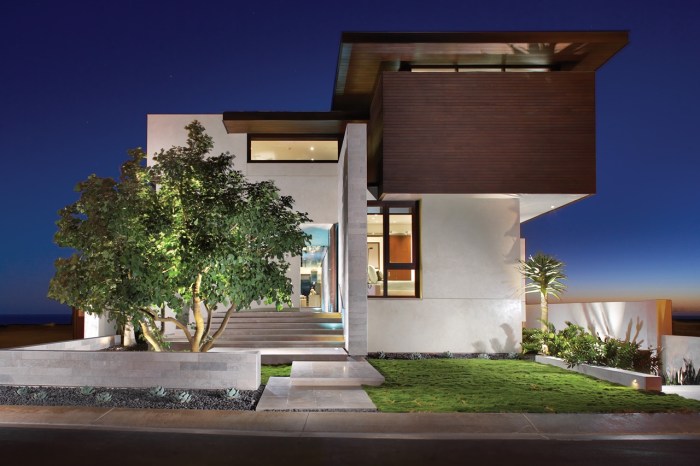
Proper lighting is crucial for walkways and driveways, especially at night. Well-placed lighting fixtures ensure visibility, enhancing safety and security. Consider using LED lights, which are energy-efficient and offer long lifespans. Path lights and spotlights can illuminate specific areas, while landscape lighting can enhance the overall aesthetic. Motion sensors can be integrated to further enhance safety and deter unwanted activity.
Table of Materials for Walkways and Driveways
| Material | Cost | Durability | Maintenance Requirements |
|---|---|---|---|
| Concrete | Moderate | High | Low to moderate (sealing, occasional repairs) |
| Pavers | High | High | Moderate (cleaning, occasional repairs) |
| Natural Stone | High | Very High | Moderate to High (sealing, cleaning, potential for erosion) |
| Wood | Moderate | Moderate | High (staining, sealing, regular maintenance) |
Construction Methods
Choosing the right construction method for walkways and driveways is crucial for achieving a durable, aesthetically pleasing, and cost-effective final product. Careful consideration of materials, labor costs, and environmental impact is are essential component in the decision-making process. Factors like the intended use, traffic volume, and local regulations should also be taken into account.
Different Construction Methods, Walkway, Driveway
Various methods exist for constructing walkways and driveways, each with its own set of advantages and disadvantages. Understanding these differences will aid in selecting the optimal approach for a specific project.
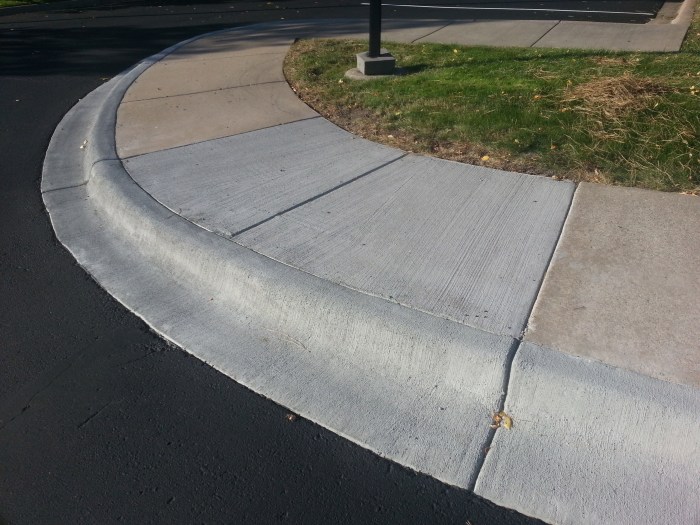
- Concrete Slabs: This method involves pouring concrete into a prepared formwork. It’s a popular choice for its durability and relatively low cost. Concrete slabs can be customized with various colors and finishes. However, they can be more susceptible to cracking under stress or if the subgrade isn’t properly prepared. Additionally, concrete curing times can impact project timelines.
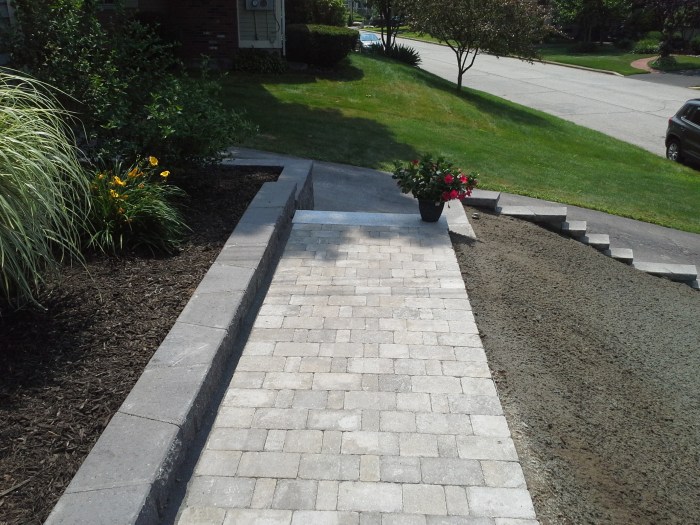
- Paver Installation: Using interlocking paving stones or bricks allows for a more aesthetic and customizable design. The varied textures and colors of pavers create a visually appealing surface. However, paver installation can be labor-intensive, and the cost can be higher than concrete. Proper drainage is critical for paver walkways to avoid water damage and uneven settling.
- Gravel or Stone Driveways: This method utilizes gravel or stone as the primary material, often covered with a stabilizing layer. Gravel driveways are cost-effective and relatively easy to install. They require less labor than other methods. However, they might not be as durable as concrete or pavers, and maintenance can be more frequent. Gravel and stone are more environmentally friendly options than concrete due to lower production energy demands and less waste.
- Asphalt: A common choice for driveways, asphalt is relatively inexpensive and quick to install. It’s a practical option for high-traffic areas. However, asphalt can be susceptible to cracking and deterioration over time. The life expectancy of asphalt driveways is generally shorter than that of concrete or pavers.
Cost and Timeframe Comparisons
The cost and timeframe associated with each method vary significantly. Factors like material costs, labor rates, and project complexity play a role in these estimations.
- Concrete Slabs: Generally, concrete slabs are a mid-range cost option, depending on the complexity of the design. Installation time is often moderate, influenced by the size of the area and the curing time of the concrete.
- Paver Installation: Paver installation tends to be higher in cost due to the labor involved in laying and arranging the stones. The installation timeframe is usually longer than concrete but shorter than a complete stone-based approach. This method often results in a longer project duration.
- Gravel or Stone Driveways: Gravel or stone driveways are usually the most cost-effective option, although the long-term maintenance costs might be more significant. Installation time is typically the shortest compared to other methods. Maintenance requirements are often more frequent than for concrete or pavers.
- Asphalt: Asphalt is often a lower-cost option, especially for large areas. Installation time is usually shorter compared to concrete or pavers. The life expectancy and maintenance requirements are factors to consider.
Installing Pavers or Concrete Slabs
These methods are detailed below, covering the essential steps.
- Grading and Site Preparation: The land must be leveled and compacted for a stable foundation. This step is critical for both pavers and concrete slabs. Poor grading can lead to uneven settling and damage.
- Excavation: Remove topsoil and any existing materials, creating a suitable base for the new walkway or driveway. The depth of excavation depends on the chosen method and the local building codes.
- Sub-base Preparation: Install a layer of compacted gravel or crushed stone to create a level, stable base. This is crucial for drainage and support for the paving materials.
- Formwork (Concrete): Create forms to define the shape and dimensions of the concrete slabs. This ensures accurate placement and prevents the concrete from spreading unevenly.
- Concrete Pouring (Concrete): Pour the concrete into the forms and use tools to ensure proper leveling and consolidation.
- Curing (Concrete): Allow the concrete to cure and harden according to the manufacturer’s specifications. Proper curing is essential for long-term durability.
- Paver Laying: Arrange the pavers according to the design, ensuring proper spacing and alignment. Use sand or other bedding materials to support and level the pavers.
Grading and Land Preparation
Thorough grading is paramount to prevent water pooling and uneven settling. Proper preparation ensures the long-term stability of the walkway or driveway.
- Site Survey: Measure the area to be paved and mark the boundaries.
- Soil Testing: Determine the soil type and its bearing capacity to assess the required foundation.
- Clearing and Grubbing: Remove vegetation, debris, and rocks to ensure a clean surface.
- Grading: Use equipment to level the ground and create a smooth, even surface. Ensure proper drainage to avoid water accumulation.
- Compaction: Compact the soil to ensure stability and prevent future settling.
Comparison Table
| Method | Cost | Time to Complete | Environmental Impact |
|---|---|---|---|
| Concrete Slabs | Medium | Moderate | Moderate (depending on concrete source) |
| Paver Installation | High | Long | Moderate (depending on paver material) |
| Gravel/Stone | Low | Short | Low |
| Asphalt | Low | Short | High (due to petroleum use) |
Maintenance and Repair
Walkways and driveways, essential components of any property, require regular maintenance to ensure their longevity and aesthetic appeal. Proper upkeep not only enhances the property’s value but also prevents costly repairs down the line. This section focuses on common maintenance issues, preventive measures, repair strategies, and resurfacing techniques for these crucial outdoor areas.
Common Maintenance Issues
Regular inspection and proactive maintenance are key to preventing costly repairs. Common issues include cracks, stains, and uneven surfaces. Cracks, often initiated by freeze-thaw cycles or improper installation, can lead to further damage and structural compromise. Stains, resulting from spills, weathering, or improper sealing, can mar the appearance and potentially compromise the material’s integrity. Uneven surfaces, arising from settling, poor compaction, or inadequate drainage, can create tripping hazards and impair the functionality of the area. Addressing these issues promptly is crucial for preserving the walkway or driveway’s structural integrity and aesthetic appeal.
Prevention Strategies
Proactive measures can significantly reduce the frequency and severity of maintenance issues. Regular inspections, performed at least twice a year, allow for early detection of developing problems. Addressing minor issues promptly prevents them from escalating into major repairs. Proper sealing, using appropriate sealants and following manufacturer recommendations, protects the surface from water penetration, which is a leading cause of damage. Maintaining proper drainage around the walkway or driveway prevents water accumulation, which can cause uneven settling and erosion. Applying a sealant or coating that is suitable for the material of the walkway or driveway, and according to the manufacturer’s recommendations, is essential.
Repair Options and Cost Comparisons
Various repair options are available, each with its cost implications. For cracks, patching with appropriate materials like epoxy or concrete is a cost-effective solution for small to moderate-sized cracks. For larger cracks, concrete resurfacing might be necessary, incurring higher costs but ensuring a more durable repair. Stains can be treated with specialized cleaning solutions, followed by resealing, depending on the type of stain and the material of the walkway or driveway. Uneven surfaces can be repaired through leveling with concrete or other appropriate materials, requiring careful planning and execution.
Sealing and Resurfacing
Sealing or resurfacing walkways and driveways can significantly extend their lifespan. Sealing protects the surface from water penetration and UV damage, while resurfacing involves a complete overhaul of the surface, providing a fresh, durable finish. Sealing typically involves applying a sealant to the surface, which protects it from water damage and wear and tear. Resurfacing options include concrete overlay, asphalt resurfacing, or paver replacement, depending on the existing material and desired aesthetic. The choice between sealing and resurfacing depends on the extent of damage and the desired outcome.
Table of Common Walkway and Driveway Maintenance Issues
| Issue | Prevention | Repair Options | Cost |
|---|---|---|---|
| Cracks | Regular inspections, proper installation, and addressing minor cracks immediately. | Patching (epoxy, concrete), Concrete resurfacing | $50-$500+ (depending on severity and materials) |
| Stains | Regular sealing, proper cleaning, and appropriate sealant application | Cleaning solutions, resealing | $25-$200+ (depending on stain type and material) |
| Uneven Surfaces | Proper drainage, compaction, and regular maintenance | Leveling with concrete, asphalt, or pavers | $100-$1000+ (depending on the extent of unevenness and materials) |
Epilogue: Walkway Driveway
In conclusion, creating beautiful and functional walkways and driveways involves careful consideration of design, construction, and ongoing maintenance. This guide has highlighted the critical factors for successful projects, from selecting the appropriate materials to implementing efficient construction methods and preventative maintenance strategies. By understanding the detailed steps in Artikeld, you’ll be well-equipped to design and maintain a walkway and driveway that meets your specific needs and enhances your property’s appeal.