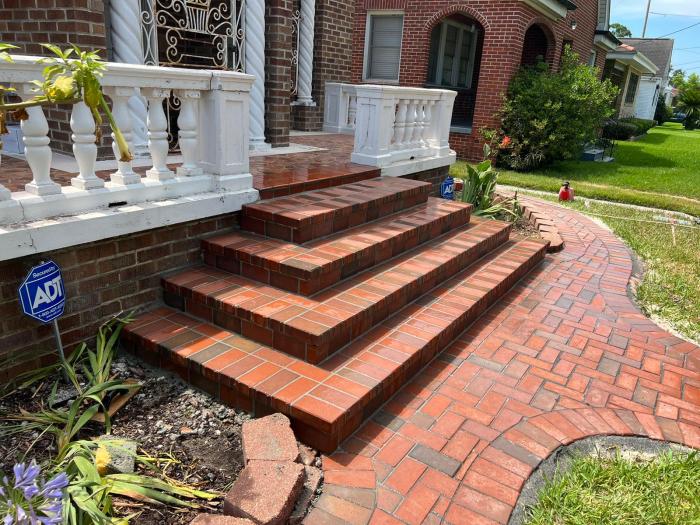
Flagstone Path Installation A Comprehensive Guide
Flagstone path installation transforms outdoor spaces, adding both beauty and durability. This guide delves into every facet, from meticulous planning and design to expert installation methods, and finally, the crucial steps for long-term maintenance.
We’ll explore various design layouts for rectangular yards, considering essential factors like drainage and slope. Understanding the different flagstone types, their costs, and durability is key, along with selecting the right installation method (dry-laid or mortared). The guide will also detail the necessary tools, ground preparation, and steps for successful installation. Finally, we’ll cover vital maintenance procedures and troubleshooting techniques, ensuring your flagstone path remains a beautiful and functional feature for years to come.
Planning and Design: Flagstone Path Installation
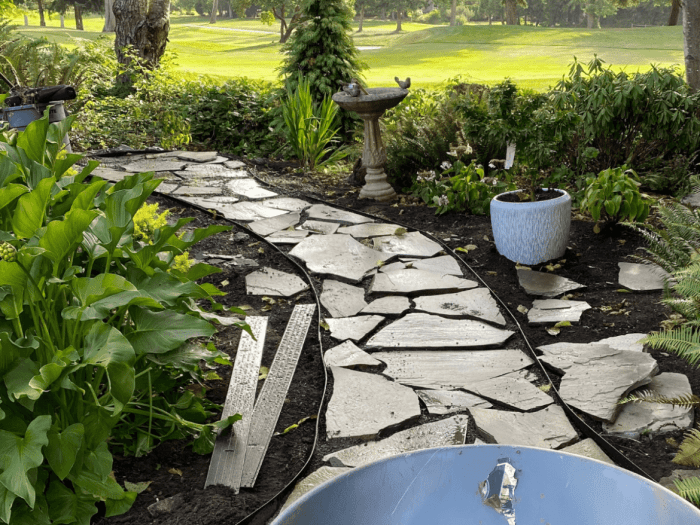
Source: galpal.net
A well-planned flagstone path enhances the aesthetic appeal and functionality of a yard. Careful consideration of design, materials, and practical aspects like drainage is crucial for a lasting and enjoyable addition. This section details the key steps involved in creating a successful flagstone path project.
Detailed surveying, precise design, and an understanding of the yard’s characteristics are paramount for a successful installation. Selecting appropriate materials and estimating the required quantity of flagstone are essential for cost-effectiveness and efficiency.
Yard Surveying Procedure
Accurate surveying is fundamental for a well-executed flagstone path project. This involves meticulously mapping the area to ensure the path aligns with the existing landscape and meets the desired aesthetic goals. The procedure typically includes:
- Marking the path’s desired boundaries on the ground using stakes and string.
- Measuring the length and width of the path to calculate the total area.
- Identifying existing features like trees, shrubs, or utility lines to avoid conflicts during installation.
- Noting the existing terrain’s elevation and slope to plan for proper drainage.
- Taking photographs and creating detailed sketches of the area to visualize the path’s final form.
Flagstone Path Layouts
Different layouts can create diverse aesthetics and functional needs. Here are three example designs for a rectangular yard:
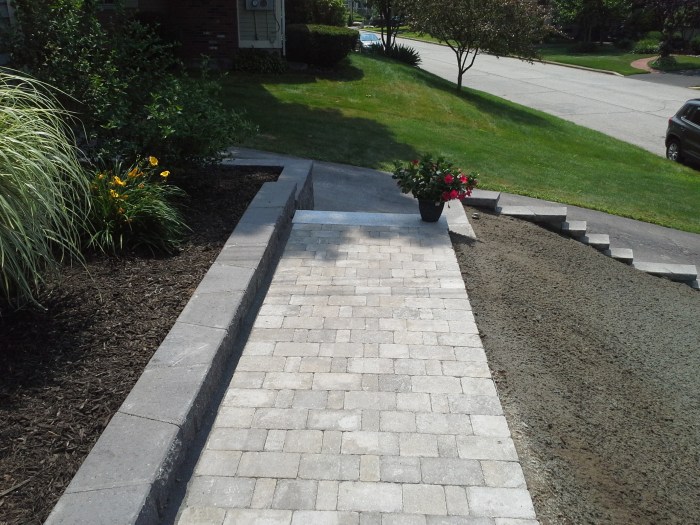
- Layout 1 (Simple): A straight path using standard-sized flagstones in a light gray color. The path’s width is 3 feet, creating a clear walkway. This design is suitable for a straightforward connection between two points. This layout requires minimal material and is ideal for simple designs.
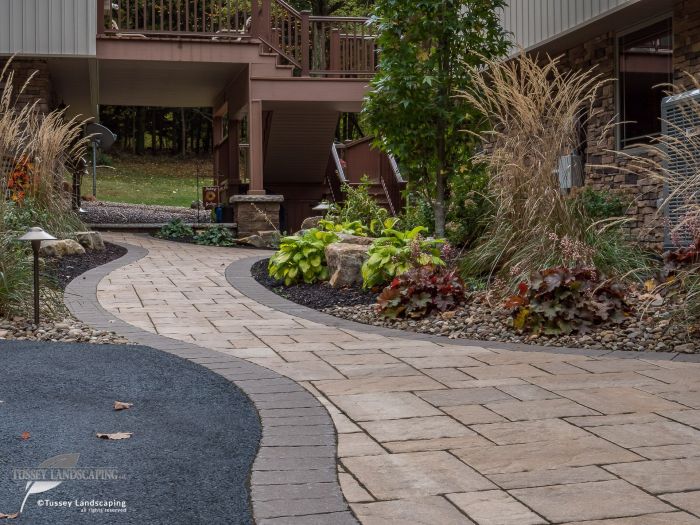
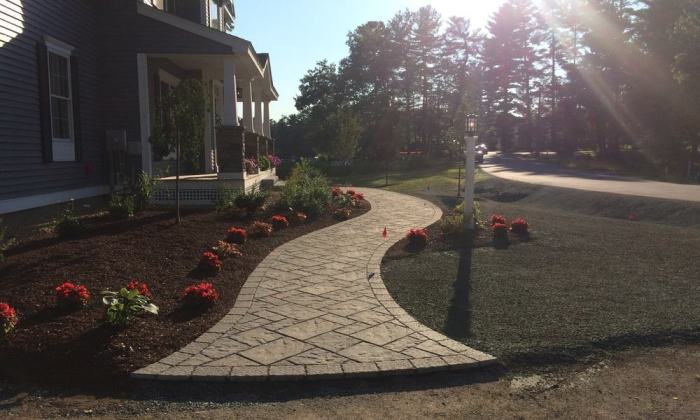
- Layout 2 (Curved): A curved path using a mix of dark gray and beige flagstones. The path’s width varies from 4 feet to 5 feet, providing a wider area for strolling or gatherings. This layout adds visual interest and creates a more welcoming ambiance. This design is more intricate, but it adds an attractive focal point.
- Layout 3 (Composite): A combination of a straight and a curved section using different-sized flagstones and patterns. The path includes a 4-foot-wide straight section transitioning to a 5-foot-wide curved section. This layout offers a balance between simplicity and visual appeal. This option combines different flagstone styles for a distinctive look.
Drainage and Slope Considerations
Proper drainage is critical to prevent water accumulation and damage to the path and the surrounding landscape. Adequate slope is vital to ensure water flows away from the path. Slope should be calculated to avoid water pooling or erosion.
- Ensure the path’s surface has a slight slope away from structures and toward drainage areas.
- Employing a French drain system to enhance water runoff is often beneficial, especially in areas prone to heavy rainfall.
- Consider the surrounding landscaping and grade changes when planning the slope.
Flagstone Types Comparison
A table outlining different flagstone types and their characteristics aids in selecting the most appropriate material:
| Flagstone Type | Durability | Cost | Aesthetic Appeal |
|---|---|---|---|
| Granite | High | High | Classic, enduring |
| Slate | Moderate | Moderate | Elegant, varied textures |
| Sandstone | Moderate | Moderate | Natural, warm tones |
| Bluestone | High | High | Rich, deep colors |
Calculating Flagstone Requirements
Accurate calculation of the required flagstone quantity is crucial for cost efficiency. The procedure involves determining the path’s area and considering the size of individual flagstones.
- Measure the length and width of the path.
- Calculate the total area of the path.
- Determine the area covered by each flagstone.
- Divide the total path area by the area of each flagstone to obtain the approximate number of flagstones needed.
- Always purchase 10-15% extra flagstones to account for breakage or imperfections.
Installation Methods and Materials
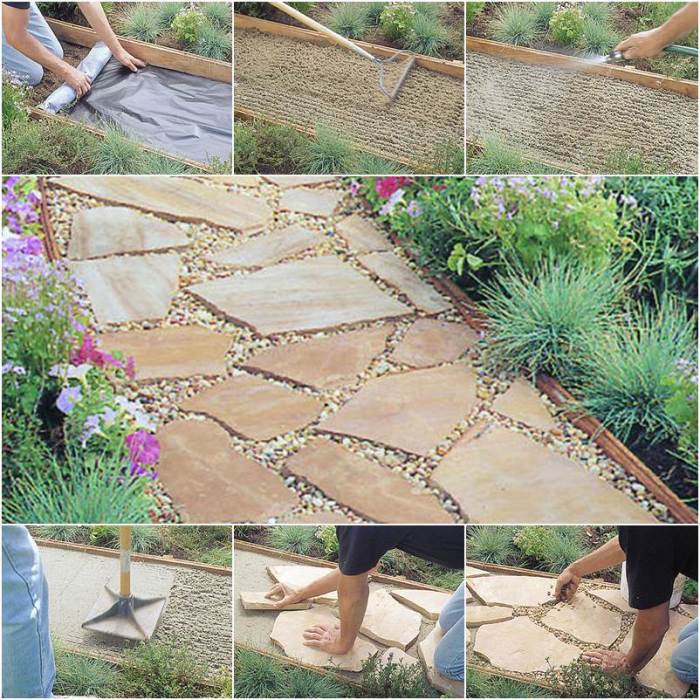
Source: icreativeideas.com
Installing a flagstone path involves careful consideration of various factors, including the desired aesthetic, budget constraints, and the specific characteristics of the chosen flagstones. Different installation methods offer varying degrees of durability, maintenance requirements, and overall cost. Understanding the nuances of each approach will aid in selecting the optimal solution for your project.
Installation Methods, Flagstone Path Installation
Various methods exist for installing flagstone paths, each with its own set of advantages and disadvantages. Understanding these differences is crucial to making an informed decision. Dry-laid and mortared installations are the most common methods.
Dry-laid installation involves laying flagstones directly onto a prepared base, typically using a bed of sand or gravel. This method is generally quicker and less expensive than mortared installations. However, it can be less stable and prone to shifting over time, particularly in high-traffic areas or with significant temperature fluctuations. Dry-laid installations are best suited for projects with a relatively flat, stable base.
Mortar installation uses a bonding agent (mortar) to secure the flagstones to the base. This method provides superior stability and prevents movement over time. However, it is more complex, time-consuming, and costly compared to dry-laid installation. Mortar installation is a good choice for high-traffic areas, areas prone to significant temperature variations, or where a more aesthetically seamless and durable path is desired.
Material Suitability
The choice of flagstone type significantly impacts the installation method and the overall project’s success. A suitable material for dry-laid installation might not be suitable for mortared installation, and vice versa.
| Flagstone Type | Dry-laid Installation | Mortar Installation |
|---|---|---|
| Large, heavy flagstones | Difficult due to potential shifting | Better suited for stability |
| Thin, lightweight flagstones | Suitable, but potentially less durable | May require specialized mortar |
| Flagstones with irregular shapes | It can be challenging to arrange | Can be more easily adjusted and secured |
Bedding Materials
The type of bedding material (sand or gravel) impacts the stability and long-term performance of the flagstone path.
Crushed stone or gravel, particularly sharp, angular gravel, offers better drainage and long-term stability than finer sands. However, the sharp edges can be harder on shoes and may require additional leveling. Finer sands, such as builders’ sand, are more versatile, easier to work with, and allow for more precise leveling, though they might compact more readily, requiring more maintenance.
Tools and Equipment
Proper tools and equipment are essential for a successful flagstone path installation.
- Shovels (various sizes for different tasks)
- Wheelbarrows for transporting materials
- Level to ensure even surfaces
- Trowel for spreading sand or mortar
- String lines and stakes for marking the layout
- Rubber mallet for setting flagstones
- Safety glasses and gloves for protection
Ground Preparation
Proper ground preparation is crucial for a stable and long-lasting flagstone path. This involves excavation and compaction to ensure a solid foundation.
Excavation involves removing topsoil to a depth appropriate for the installation method and bedding material. Compaction is essential to eliminate voids and ensure the stability of the base. A properly compacted base prevents the settling and shifting of the flagstones over time. Consider using a mechanical compactor for larger areas or manual compaction methods for smaller projects. The type of soil will influence the amount of excavation and compaction needed. Clay soils, for example, require more attention to compaction.
Maintenance and Troubleshooting
Proper maintenance is crucial for extending the lifespan and aesthetic appeal of your flagstone path. Regular care prevents issues like weeds, cracks, and uneven settling, ensuring your path remains a beautiful and functional part of your landscape for years to come. A well-maintained flagstone path adds value and charm to any property.
Recommended Maintenance Procedures
Regular cleaning and sealing are essential for maintaining the beauty and longevity of your flagstone path. Thorough cleaning removes dirt, debris, and other contaminants, while sealing protects the stone from moisture damage and staining.
- Cleaning: Use a soft brush and mild detergent solution to clean the flagstones. Avoid harsh chemicals or abrasive tools that could damage the stone’s surface. For heavier soiling, consider a pressure washer with a low-pressure setting. Always test in an inconspicuous area first to ensure the cleaning method doesn’t affect the sealant or stone color.
- Sealing: Apply a sealant specifically designed for flagstone. This will help protect the stone from water penetration, reducing the risk of staining and deterioration. Follow the manufacturer’s instructions carefully regarding application frequency and product type. Regular sealing, typically every 1-3 years, depending on the environment and type of sealant, is recommended.
Common Installation Issues and Solutions
During installation, various issues can arise. Prompt identification and resolution are key to preventing further problems and maintaining the path’s integrity.
| Problem | Potential Cause | Solution |
|---|---|---|
| Uneven Settling | Improper sub-base preparation, inadequate compaction, or shifting soil conditions. | Assess the affected area, address the underlying issue (e.g., adding more compacted gravel), and re-level as needed. Consider using leveling compounds or adjusting the stone placement. |
| Cracks | Uneven settling, insufficient support, or impact damage. | Repair the crack with a suitable patching material, ensuring proper adhesion. Address the root cause of the cracking to prevent future issues. |
| Weed Growth | Improper weed barrier installation or inadequate soil preparation. | Remove weeds promptly, applying a pre-emergent herbicide to prevent future growth. Use a landscape fabric or other weed barrier underneath the flagstones. |
| Staining | Spills, moisture penetration, or improper sealing. | Clean up spills promptly. Ensure the flagstones are properly sealed. If staining persists, professional cleaning might be necessary. |
Repairing Cracks and Damaged Areas
Addressing cracks or damaged areas in a flagstone path requires careful attention to detail. Following a step-by-step approach ensures a lasting repair.
- Assess the Damage: Carefully inspect the crack or damaged area, determining its size and depth. Note the surrounding stone condition.
- Prepare the Area: Clean the affected area thoroughly, removing any loose debris or dirt. Ensure the area is dry.
- Choose a Repair Material: Select a suitable patching compound designed for flagstone. Consider the size and depth of the crack when choosing the material.
- Apply the Patching Compound: Apply the patching compound according to the manufacturer’s instructions, ensuring a smooth and even surface. Avoid over-applying.
- Finishing Touches: Once the compound has cured, clean the surrounding area and blend the repair seamlessly with the existing flagstone. Consider re-sealing the repaired area.
Sealing Methods and Benefits
Various sealing methods are available for flagstone, each offering unique benefits. Selecting the right sealant depends on the specific needs of your path.
- Penetrating Sealers: These sealers penetrate the stone’s surface, offering protection against moisture absorption and staining. They are generally less prone to cracking or peeling. They require less surface preparation compared to surface sealers.
- Surface Sealers: These sealers form a protective layer on top of the stone, providing a barrier against moisture and stains. They are typically easier to apply than penetrating sealers but may require more frequent reapplication. Surface sealers are ideal for paths that experience heavy traffic or frequent exposure to water.
- Benefits of Sealing: Sealing extends the life of your flagstone path, protects it from weathering, and enhances its aesthetic appeal by preventing stains and discoloration. A well-sealed path is easier to clean and maintain, requiring less frequent scrubbing.
Last Recap
In conclusion, installing a flagstone path is a rewarding project, combining artistry and practicality. By carefully considering design, installation methods, and long-term maintenance, you can create a stunning and enduring outdoor pathway. This comprehensive guide provides a roadmap for success, equipping you with the knowledge and expertise to embark on this project confidently. Remember, proper planning, meticulous execution, and proactive maintenance are essential to a lasting, beautiful flagstone path.